
Introduction
Point-of-care testing (POCT) has become one of the most transformative developments in modern healthcare. Defined as diagnostic testing performed at or near the site of patient care, POCT enables clinicians to obtain rapid results and make immediate clinical decisions without relying on central laboratories. (NCBI)
Advances in miniaturisation, biosensor technology, and digital connectivity have expanded the range and accuracy of POCT devices, allowing them to be used across hospitals, primary care, pharmacies, and even patients’ homes. (Diagnostics)
Among the wide variety of available tests, a small number stand out for their clinical impact, scalability, and contribution to improving patient outcomes. This article explores five of the most impactful POCTs currently used in healthcare: blood glucose testing, cardiac troponin testing, infectious disease rapid tests (including COVID-19), HbA1c testing, and C-reactive protein (CRP) testing.
1. Blood Glucose Testing




Blood glucose testing is arguably the most widely used and impactful form of POCT globally. It is essential in the management of diabetes mellitus, a condition affecting hundreds of millions of people worldwide.
Portable glucose meters allow patients and clinicians to measure blood glucose levels within seconds using a small capillary blood sample. This immediate feedback enables real-time decision-making regarding insulin dosing, dietary adjustments, and lifestyle changes.
The impact of glucose POCT lies in its ability to:
- Empower patient self-management
- Prevent acute complications such as hypoglycaemia and hyperglycaemic crises
- Support long-term control of diabetes
Continuous glucose monitoring (CGM) and Flash Glucose Monitoring (FGM) systems represent a further evolution, providing real-time data and trends rather than single measurements.
POCT glucose testing exemplifies the core advantage of near-patient diagnostics: rapid results that directly inform treatment decisions and improve outcomes. (Diagnostics)
2. Cardiac Troponin Testing

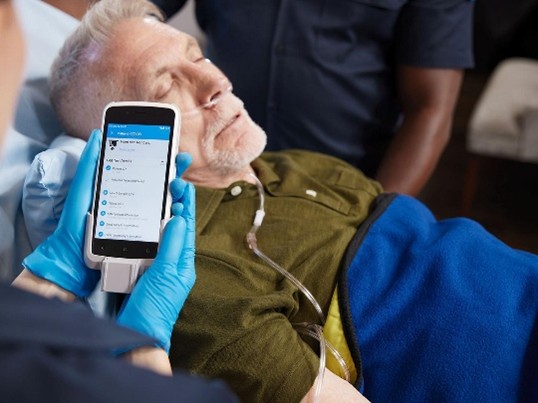
Cardiac troponin testing at the point of care could improve the diagnosis of acute coronary syndromes (ACS), including myocardial infarction (heart attack).
Troponins are highly specific biomarkers released into the bloodstream when cardiac muscle is damaged. Traditionally, testing required laboratory analysis, leading to delays in diagnosis. POCT devices now allow rapid measurement of troponin levels directly in emergency or community settings. The uptake of these tests has been slow due to difficulties in interpreting results versus onset of symptoms, differing units of measurement between laboratory and non-laboratory methods, and confidence levels in test performance.
The clinical impact can be substantial:
- Faster diagnosis or exclusion of myocardial infarction
- Reduced time to treatment in emergency settings
- Improved patient triage and risk stratification
Studies highlight that high-sensitivity troponin POCT can significantly enhance early decision-making in acute care pathways. (PubMed)
In time-critical conditions such as heart attacks, where “time is muscle,” the ability to obtain results within minutes can be life-saving.
3. Infectious Disease Rapid Tests (e.g., COVID-19, Influenza, HIV)
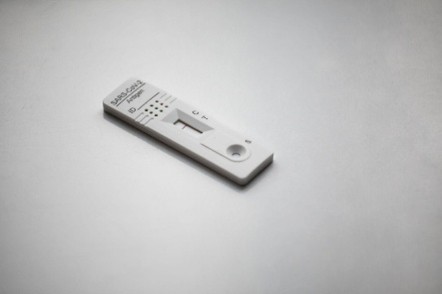

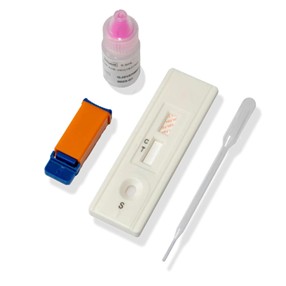
Rapid diagnostic tests for infectious diseases are among the most visible and impactful POCT innovations, highlighted prior to, and during, the COVID-19 pandemic.
Lateral flow assays and similar rapid tests enable detection of pathogens such as:
- SARS-CoV-2 (COVID-19)
- Influenza viruses
- HIV
- Streptococcal infections
These tests typically provide results within 10–30 minutes and can be used in a wide range of settings, including homes, pharmacies, and community clinics.
Their impact includes:
- Rapid identification and isolation of infectious individuals
- Reduced transmission in communities
- Improved outbreak control and public health response
During the COVID-19 pandemic, POCT played a crucial role in expanding testing capacity and enabling rapid case identification, particularly in settings where laboratory testing was not feasible. (MDPI)
Although some concerns exist regarding sensitivity compared to laboratory methods, the accessibility and speed of these tests make them indispensable in public health.
4. HbA1c Testing




HbA1c (glycated haemoglobin) testing is a cornerstone of diabetes diagnosis and long-term monitoring. Unlike blood glucose testing, which provides a snapshot, HbA1c reflects average blood glucose levels over the previous 2–3 months.
Point-of-care HbA1c devices allow clinicians to obtain results during a single consultation, eliminating the need for laboratory processing and follow-up appointments.
The benefits include:
- Immediate clinical decision-making during patient visits
- Improved patient engagement and adherence
- Reduced delays in treatment adjustment
POCT HbA1c testing is particularly valuable in primary care and community settings, where continuity and convenience are critical. It supports a more patient-centred approach by enabling “test and treat” models of care.
Given the global burden of diabetes, HbA1c POCT has a major impact on population health and chronic disease management.
5. C-Reactive Protein (CRP) Testing

C-reactive protein (CRP) is an inflammatory biomarker used to assess infection and inflammation. Point-of-care CRP testing is widely used in primary care to guide antibiotic prescribing decisions, particularly for respiratory tract infections.
CRP POCT provides rapid results that help clinicians distinguish between bacterial and viral infections, which is critical in reducing unnecessary antibiotic use.
Its key impacts include:
- Supporting antimicrobial stewardship
- Reducing inappropriate antibiotic prescriptions
- Improving diagnostic confidence in primary care
POCT CRP has been shown to influence prescribing behaviour, helping clinicians avoid antibiotics in cases where they are unlikely to be beneficial. This is particularly important in addressing the global challenge of antimicrobial resistance. The ability to deliver results within minutes aligns with the broader goal of POCT: enabling timely, evidence-based decision-making at the point of care. (Diagnostics)
Discussion
These five POCTs demonstrate the breadth of applications and impact of near-patient diagnostics across healthcare:
| Test | Clinical Area | Key Impact |
| Blood glucose | Diabetes | Real-time self-management |
| Troponin | Cardiology | Rapid diagnosis of heart attack |
| Infectious disease tests | Public health | Outbreak control and screening |
| HbA1c | Chronic disease | Long-term diabetes management |
| CRP | Primary care | Antibiotic stewardship |
A common theme across all these tests is their ability to reduce diagnostic delay, which is a critical determinant of clinical outcomes. POCT brings testing closer to the patient, enabling faster diagnosis, earlier treatment, and more efficient use of healthcare resources. (NCBI) Additionally, POCT supports the shift toward decentralised and community-based healthcare models, aligning with modern health system priorities such as accessibility, patient-centred care, and cost efficiency. (Diagnostics)
Conclusion
Point-of-care testing has fundamentally changed the way healthcare is delivered, moving diagnostics from central laboratories to the bedside, clinic, and home. Among the many available tests, blood glucose monitoring, cardiac troponin testing, infectious disease rapid tests, HbA1c testing, and CRP testing stand out as the most impactful due to their widespread use and significant influence on clinical decision-making.
These tests illustrate the core value of POCT: delivering rapid, actionable information that improves patient outcomes. As technology continues to evolve, the scope and accuracy of POCT are likely to expand further, reinforcing its role as a cornerstone of modern healthcare.
References
- Larkins, M. C., Zubair, M., & Thombare, A. (2025). Point-of-Care Testing. StatPearls Publishing. (NCBI)
- Roche Diagnostics (2025). The rising importance of point-of-care testing. (Diagnostics)
- Cullen, L., Collinson, P. O., & Giannitsis, E. (2022). Point-of-care troponin testing. Emergency Medicine Journal. (PubMed)
- MDPI (2023). Point-of-care testing for SARS-CoV-2 in primary care. (MDPI)
- CAS Insights (2024). Point-of-care testing applications in infectious diseases. (cas.org)

Tony Cambridge is the Managing Director of Thornhill Healthcare Events and Consultancy, and former Lead Biomedical Scientist in the Pathology Management team of a busy acute care hospital in England. He frequently speaks at national and international healthcare events, and is a key opinion leader for point of care testing. He is also a member…

The company was set up in 2018 by Tony Cambridge MSc. BSc. Lead Biomedical Scientist, who is the managing director. With over 20 years experience in Blood Sciences and more recently Pathology management, Tony set out to provide affordable training opportunities to healthcare organisations through a number of different ways, from small group seminars to…