
The History of Presepsin
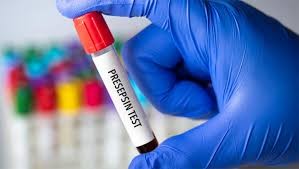
Presepsin has been around for about 20 years since its discovery in Japan as a sepsis biomarker. Various studies have measured this biomarker in sepsis cases and looked at the diagnostic ability and severity and outcomes including prognosis. There is a significant amount of bias due to the various sepsis criteria used and locations e.g ED , ITU , Haematology units and Neonatal units etc, but it is now possible to look at the Emergency Department studies to date and form an opinion on the use of this biomarker either alone or in combination with other biomarkers to diagnose and risk stratify sepsis with undifferentiated ED presentations.
Formation

For simplicity – CD14 is a co-receptor on the monocyte and macrophage cell surfaces that can identify the Gram +ve and Gram -ve bacterial ligands. As the monocyte or macrophage engulfs the bacteria, this activates the immediate innate immune response and the release of Presepsin and it also triggers a cytokine release. The more macrophages and monocytes that are involved the greater the release of Presepsin. The levels in plasma increase within 2 hours with sepsis and reach a max in 3 hours. The T 1/2 life is 4-5 hours making it an ideal biomarker for early risk signalling in sepsis.
Accuracy

Normal values of presepsin in the adult blood range from 100 to 200 pg/ml with some authors quoting a median value of 202 pg/ml and some a cut off at 184 pg/ml. What we know is the levels rise with renal dysfunction and in the elderly. The male to female ratio is 1:1. A near patient point of care result can be available within 20 minutes.
Liu et al 2013 looked at 859 ED patients with SIRS / Sepsis or Septic Shock over a 12 month period. They found cut off’s at 317 pg/ml , 449 pg/ml and 550 pg/ml gave sensitivities for sepsis, severe sepsis and septic shock of 70- 85%. The AUC for sepsis was 0.82 with Procalcitonin (PCT) for comparison at 0.72. The 28 day mortality cut off was 556 pg/ml with a specificity of only 66%, but the 28 day survivors had median levels of 412 pg/ml and the non survivors had levels of 748 pg/ml.
Romualdo et la 2014 looked at 226 ED patients admitted through ED with SIRS – 37 were blood culture +ve and 189 were -ve. A cut off at 729 ng/L gave a sensitivity of 81% and specificity of 63%
Carpio et al 2015 tested 120 SIRS patients matched with healthy controls and a cut off at 581 ng/L diagnosed sepsis with a graduated severity and differentiated SIRS from Sepsis in ED with a sensitivity of 61% and specificity of 100%.
Prognosis

Presepsin correlates with the SOFA score and end organ failure and correlates with clinical scoring systems like the APACHE 2 score with 28 day mortality prediction. Higher Presepsin levels on ED with gram -ve bacterial infections. A fall in the day 7 Presepsin level is a good prognostic indicator of correct antibiotic treatment and medical improvement.
Risk Assessment

The research evidence points to Presepsin as being a worthy addition to a biomarker test plate for sepsis, but not on its own. Presepsin rises earlier than either CRP or PCT and evidence points at levels of 500 pg/ml – 650 pg/ml signalling a high risk of sepsis. As Presepsin involves monocytes and macrophages and a more specific link to bacterial sepsis, it could be used in early antibiotic decision making. There is evidence that higher levels > 900 ng/L may indicate a gram -ve infection and also a higher risk of mortality.

1. Presepsin is a sepsis biomarker that has some specificity for cellular response to infection and rises within a few hours.
2. Levels of 500 pg/ml to 650 pg/ml show evidence of moderate to severe sepsis
3. Presepsin levels correlate with SOFA scores and APACHE 2 scores
4. Higher initial presentation levels correlate with higher risk , risk of gram -ve sepsis and mortality. Falling levels at day 7 correlate with correct treatment.
5. Presepsin should be considered on a multiplex biomarker point of care test along with other biomarkers covering the spectrum of the immune response to sepsis

Emergency Physician Liverpool , UK. Innovation | Med Tech Award Winner- NHS and SBRI A lead physician in one of Europe’s busiest emergency departments – designated major trauma centre and teaching hospital. Responsible for major trauma, acute medical and surgical cases, fractures and soft tissue injuries. The Trust clinical lead for Major Incident Planning including…