

Case 3 – Urinary Tract Infection (UTI) vs Acute Pyelonephritis (APN).
Urinary tract infection is one of the most common infections in general clinics, GP surgeries, care homes and A&E attendances. Female lifetime incidence is 50-60% , its one of the most common reasons for care home antibiotics and pyelonephritis is responsible for 100,000 admissions to hospital in the USA per year. Infection that develops in the bladder can cause bladder wall inflammation ( cystitis), and that infection can ascend towards the renal tract and renal tissue and cause pyelonephritis and lead to severe sepsis. The most common organism is E Coli followed by Staphylococcus saprophyticus and then Enterococci sp. A urinary tract infection ( UTI ) commonly refers to the lower urinary tract and pyelonephritis ( APN) affects the kidney and upper urinary tract.

Suspected UTI in the elderly.
A study looking at suspected UTI in elderly residents in the care home setting looked at 13 care homes with 302 patients > 65 yrs old enrolled in the study. Kuil et al in Clinical Infectious Diseases Vol 73, Issue 11, 2021 found that 20% of the patients (49) fulfilled the UTI criteria. At a cut off for CRP of 6.5mg/L the sensitivity was only 52.3%. They concluded that CRP was not suitable to distinguish UTI from asymptomatic bacteriuria (ASB). The same study found that Procalcitonin (PCT) faired no better with a sensitivity of 37%.
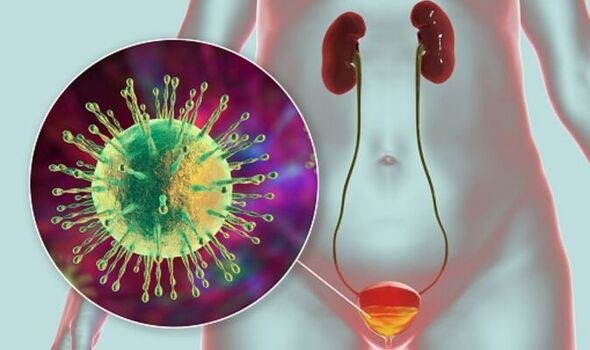
Differentiating lower tract urinary infection (bladder) from upper tract infection(kidney).
A study by Swamy et al in Cureus open access article (Web) June 29;14(6) 2022 looked at 81 patients with confirmed UTI on microscopy and by USS pelvis. They found a split of 53% upper tract signs and 46% lower tract signs. A mean CRP for the upper tract group was 113mg/L and for the lower tract was 12.8 mg/L. E coli was the dominant bacteria in 88% upper tract and 65% lower tract infections. In upper tract infection CRP was > 100mg/L in 34 out of 43 cases and in lower tract infection the CRP range was 3 – 50mg/L in 35 out of 38 cases. When pelvic ultrasound scan was added – abnormal renal tissue was found with CRP > 100mg/L and bladder wall thickening ( cystitis) with CRP range 3-50mg/L. A similar finding by Mamantha et al Journal of Medical Science and Clinical Research 2020 vol 8 (issue 02) looked at 65 cases with 26 upper tract infections and 39 lower tract. The mean CRP in upper tract infection was 126.6mg/L and in lower tract infection was 5.1mg/L ( P< 0.01).
Cystitis – symptoms of a UTI but no infection. Symptoms of bladder pain, pelvic pain and lower urinary tract symptoms that mimic infection – this is Interstitial cystitis or bladder pain syndrome. The bladder wall shows inflammatory changes and may contain ulceration. Blood CRP levels will not be raised, but urine CRP together with other urine biomarkers like Uroplakin III, IL 6 and 8 and some growth factors like NGF and VEGF are raised in this syndrome. A single device and multiplex test to measure blood and urine inflammatory and sepsis biomarkers are likely needed to rule in this condition and rule out infection as antibiotics are not the 1st line treatment.


Accuracy. Very few studies have looked at biomarkers in detail with respect to upper and lower tract urinary infections and most of the studies suffer from low patient numbers. From those studies a blood CRP > 100 mg/L with clinical symptoms and signs of pyelonephritis and a diagnostic USS of the kidney could help to rule in upper tract infection.
Prognosis.There are currently no published research papers that can answer the question of outcome and prognosis from an admission CRP with urinary tract sepsis. A study proposal has been submitted by the University of Southern Denmark to the USA in 2022 to assess the diagnostic and prognostic value of CRP in suspected pyelonephritis aiming for 229 patients in the study.


Risk.
When presented with adults with signs of infection that point to the urinary tract system – a CRP > 100mg/L represents a higher risk for upper tract infection and pyelonephritis. A CRP < 5mg/L with no or very few clinical symptoms and signs of a urinary tract infection could be used to cautiously rule out infection, but bladder wall inflammation may still be present.

1.There are very few studies that look at biomarkers in adult urinary tract infection and differentiate the lower tract from the upper tract infections.
2. A blood CRP > 100mg/L can be used together with a clinical risk score to help to risk stratify the higher risk pyelonephritis from lower tract and bladder wall infection and inflammation. Combining renal and bladder ultrasound can help with the differentiation.
3. CRP cannot differentiate lower tract infection and bladder wall inflammation from asymptomatic bacteriuria (ASB) in elderly patients. Bacteria in the urine does not always = infection!
4. Chronic cystitis and bladder pain syndrome are unlikely to raise inflammatory biomarkers in the blood stream unless significant ulceration or systemic infection is present and new developments are needed to measure urine biomarkers like IL6 and NGF at the same time as blood biomarkers to help to rule in or rule out inflammatory from infectious causes.
4. A CRP < 5mg/L and with no or few clinical signs of a urinary tract infection may help to exclude significant infection, but further studies are needed to look at other biomarkers perhaps in the urine together with serum markers to better understand the process of moving from asymptomatic bacteriuria through to bladder wall inflammation and then bladder wall and upper tract infection.

Emergency Physician Liverpool , UK. Innovation | Med Tech Award Winner- NHS and SBRI A lead physician in one of Europe’s busiest emergency departments – designated major trauma centre and teaching hospital. Responsible for major trauma, acute medical and surgical cases, fractures and soft tissue injuries. The Trust clinical lead for Major Incident Planning including…